Capabilities
What each capability does, shown running in the Hawthorne R&D lab, with its measured result or governing standard.

Robotic welding cell.
Outcome: welding capacity that does not depend on hiring welders.
CAD-to-path planning, programmable weld control, and TIG, MIG, and laser in one cell, designed and built by AMR across mechanical, electrical, controls, and simulation.
Robotic welding cell
Plans the weld path from CAD, then welds with TIG, MIG, or laser.
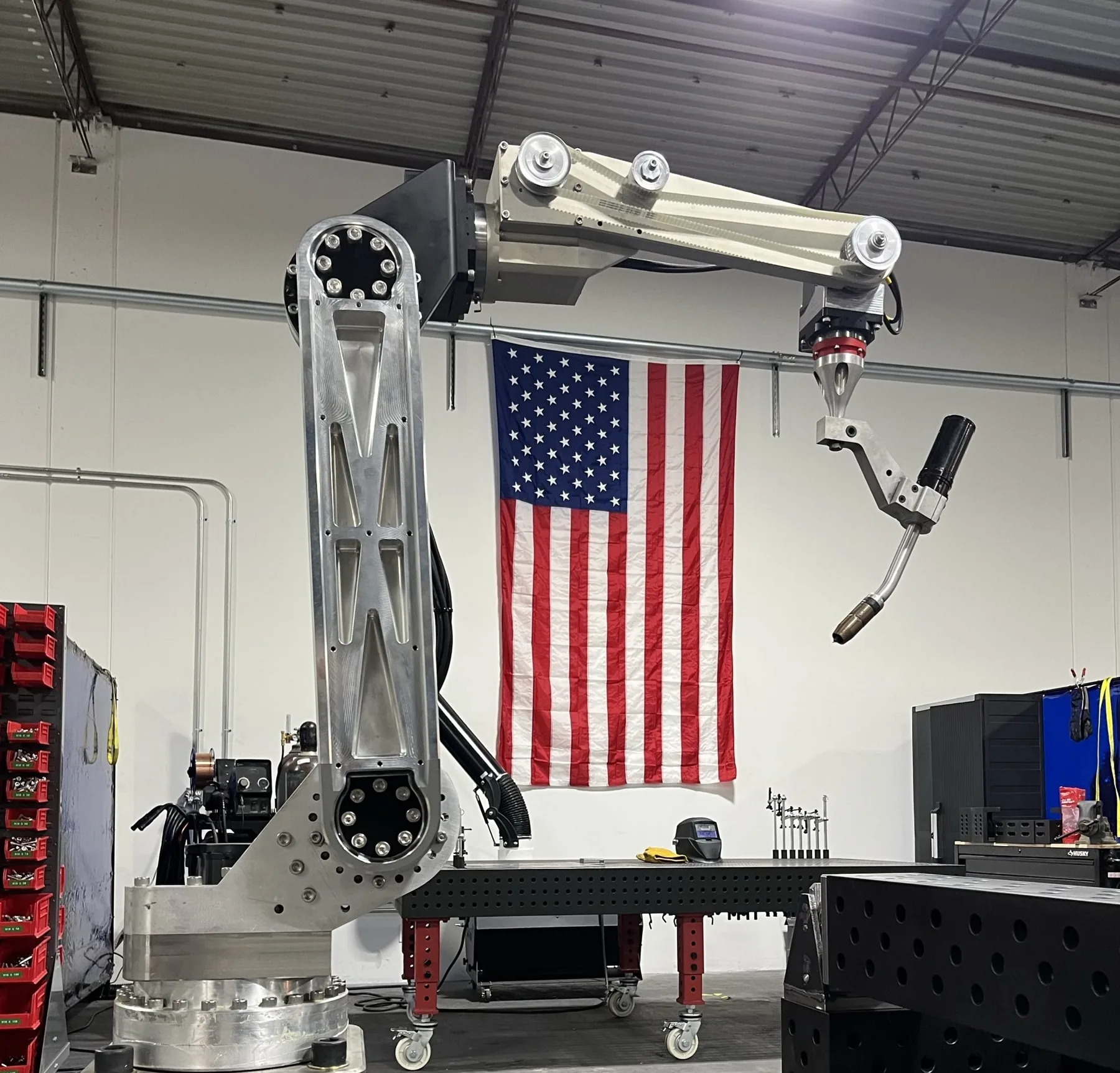
Rosie 1400 six-axis robot
Positions the torch anywhere within a 1,400 mm reach. Designed, machined, and assembled by AMR. Specification.
Containerized welding cell
Packages the complete cell in a shipping container for deployment to the work site. War Machine.
Mechanical engineering and machining
Designs and machines the arm's structural and drive parts in-house, from CAD to finished metal.
Laser welding
Welds with a 2–10 kW fiber laser inside an enclosure with door and vision safety interlocks.
Electrical engineering and controls
A professionally built control cabinet: three-phase power distribution, servo drives, and a hardware safety chain. The robot moves only when the safety chain reports ready.
H-frame positioner
Rotates and tilts the workpiece so every weld sits in a reachable, downhand position.
Real-time motion control
Coordinates all six joints in real time from RosieOS, AMR's controller software, open source under Apache 2.0. Weld programs are collision-checked before they load and can be previewed in simulation first.
Real-time weld sensing.
Outcome: measured evidence for every weld.
Sensing hardware designed and built by AMR. With the welding intelligence package, a paid and optional skill, adaptive control adjusts path, torch, and heat during the weld, and the cell inspects every weld it makes.
Seam tracking
Finds and follows the joint in 3D during the weld, so the torch stays on the seam through part and fit-up variation.
3D geometry inspection against CAD
Measures the part in 3D and verifies it against the CAD model and its GD&T, with micron-level measurement.
Weld-pool monitoring
Images the molten pool during every weld, so defects are caught while the part is still in the cell.
Adaptive weld control
Measures the seam and pool during the weld and adjusts path, torch, and heat in real time, on AMR-built hardware.
Acoustic process monitoring
Detects process faults from arc sound and monitors process stability through the weld. Arc start is clearly distinguishable from ambient noise.
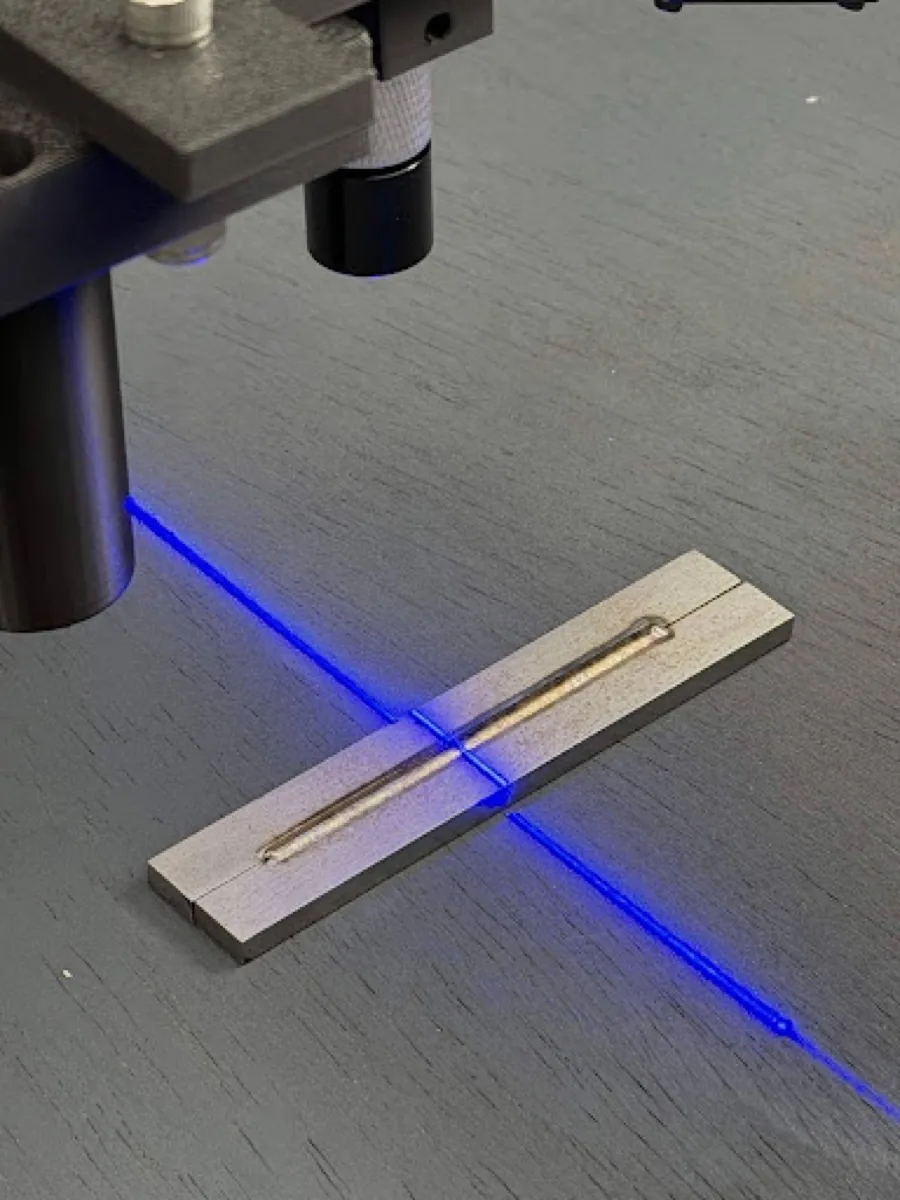
Structured-light inspection
Checks joint fit-up before welding and weld geometry after it, so a poor fit-up is found before the arc starts.
Metallurgical laboratory.
Outcome: faster weld qualification.
Procedures are developed and tested at AMR, so the qualification evidence comes from the same lab that ran the weld. The metallurgical lab
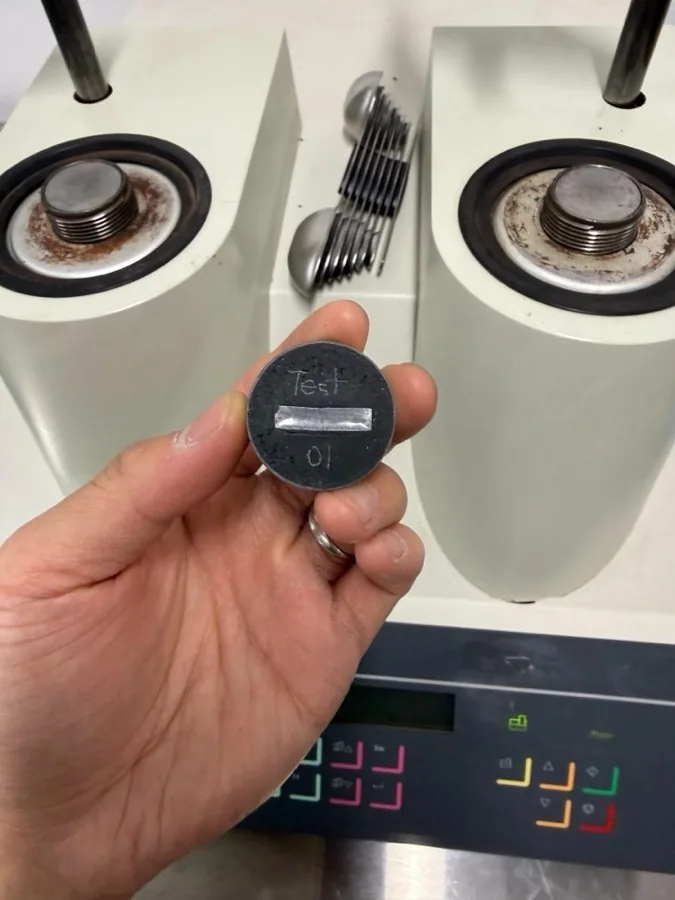
Sectioning and metallography
Prepares a weld coupon as a traceable cross-section: cut, mounted, ground, and polished.
Macro inspection
Evaluates penetration and defects on the etched cross-section against the acceptance standard.
Thermal weld-pool simulation
A weld physics simulator, calibrated against real welds, predicts melt-pool temperature and shape so procedures are tuned before the first weld.
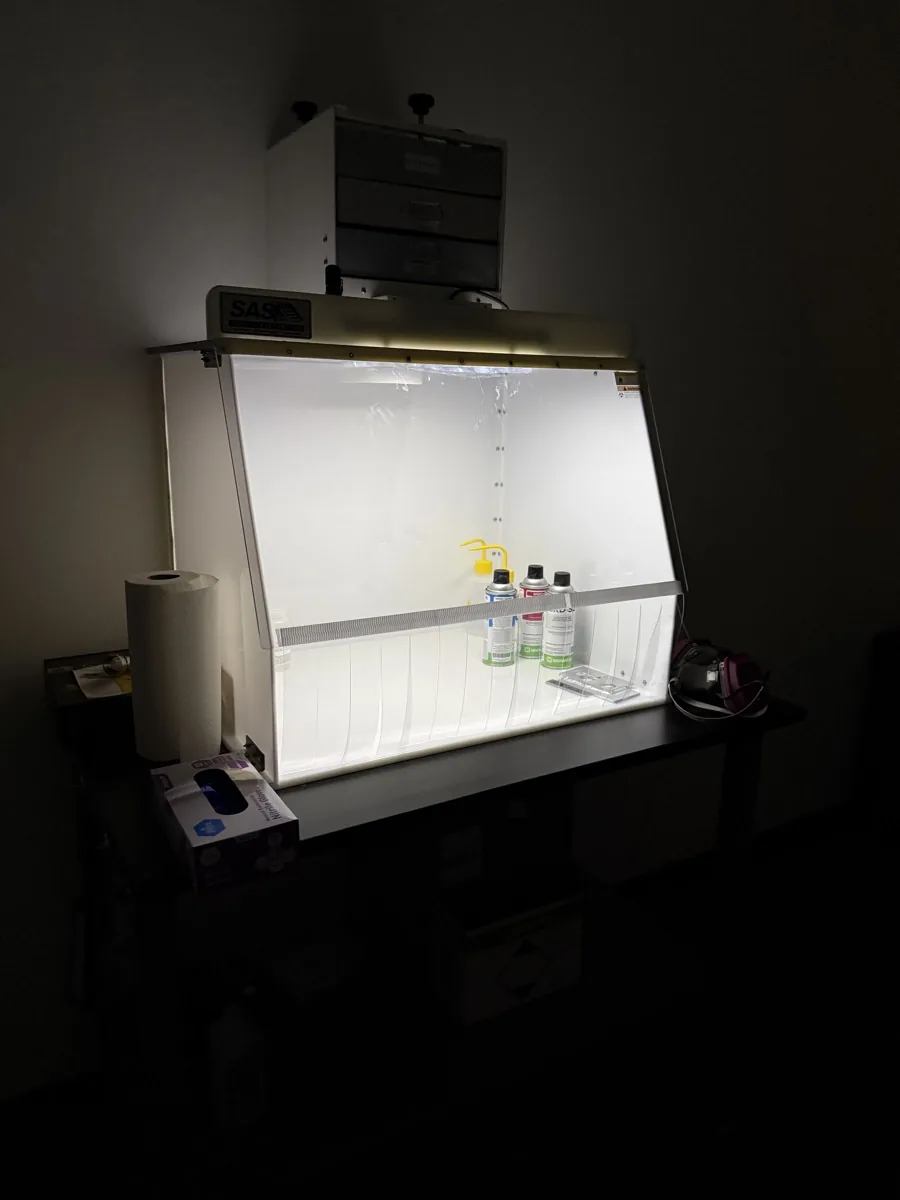
Dye-penetrant NDT
Detects surface-breaking cracks nondestructively with aerosol dye penetrant.
Traceable weld records
Produces a record for each sample: a traveler, a machine-readable analysis file, and a report.
Software test and qualification
Tests every robot software change and records pass/fail evidence before it is released to a cell.
Technician training.
Outcome: trained operators for advanced manufacturing cells.
We train the technicians who set up, program, and inspect the cell, on the production hardware and software.
Weld-sequence authoring
Operators select seams on the 3D CAD model, and the software generates the robot sequence.
CAD-to-path programming
Turns a CAD model into a collision-free robot path, which can be previewed in simulation before any live motion.
Handheld teach pendant
Programs, jogs, and runs weld paths from a handheld Steam Deck, outside the interlocked door.
Technician curriculum
Maps every skill a technician needs as a navigable dependency graph.
Hands-on cell training
Technicians learn setup, programming, sensing, and inspection on the production cell.
Operator orientation
Introduces new operators to the arm, positioner, sensing, and controls before they run the cell.
Send AMR a weld problem, an assembly, or a program requirement.
Everything on this page runs in the Hawthorne R&D lab today. Schedule a visit or send the part.
We'll tell you what Rosie and War Machine can do with it.