Open-source, AI-native industrial robots.
Machined and assembled in the USA.
The controller, RosieOS, is open source and fully unlocked. Program the robot any way you like: from the pendant, in code or with any AI. Add skills when you need them, starting with welding.
Industrial robots are reliable. Everything around them holds factories back.
The established robot makers build machines that run for years. Buying, programming and servicing them is the hard part.
Features sold back to you
Motion functions, process packages and programming seats are licensed one by one, on a robot you already paid for.
Closed languages
Each maker has its own language and tools. Programs do not move between brands, and outside software, AI included, gets limited access.
Service you cannot see into
Service is slow, opaque or expensive. When a line is down, the wait is the cost.
No real alternative
Buyers stay because the robots are reliable. Some makers publish open drivers, but those still need extra software options unlocked on the controller.
One open stack, from arm to application.
The platform
- Skills: paid and optional, welding first.
- Open sensing: raw data in the robot's frames.
- RosieOS: the controller, open source under Apache 2.0.
- Rosie 1400: the hardware.
How an AI agent can do the integration
- Learn: docs any agent can read.
- Simulate: the cell and the weld physics, in a weld physics simulator with an AI world model.
- Check: the program is verified before it loads.
- Drive: the RosieOS MCP server and one open control API.
- See: open sensors.
- Verify: the metallurgy lab sections the weld and tests hardness and microstructure, and the results go back to the agent.
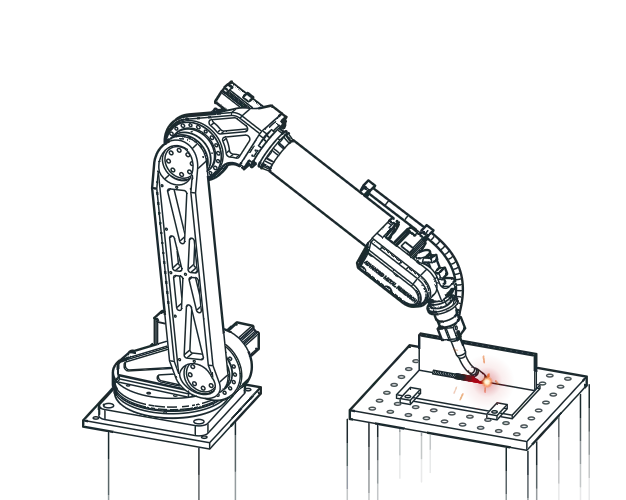
Sensors show what happened. We cut our welds open and test them in our lab to understand the metallurgical processes and record the data for training. From that data, the simulator learns why.
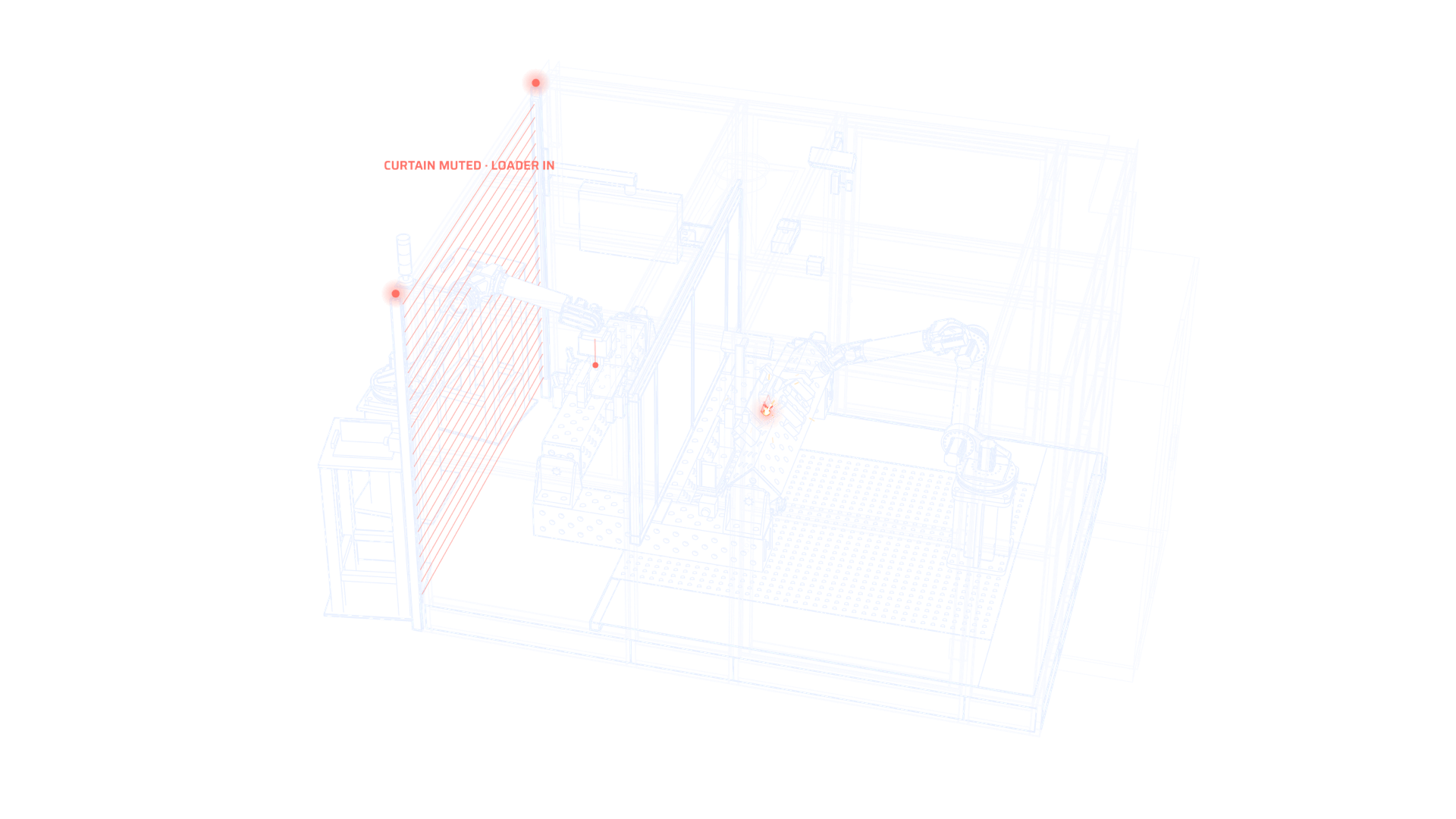
Like any industrial equipment, the machine has physical E-stops.
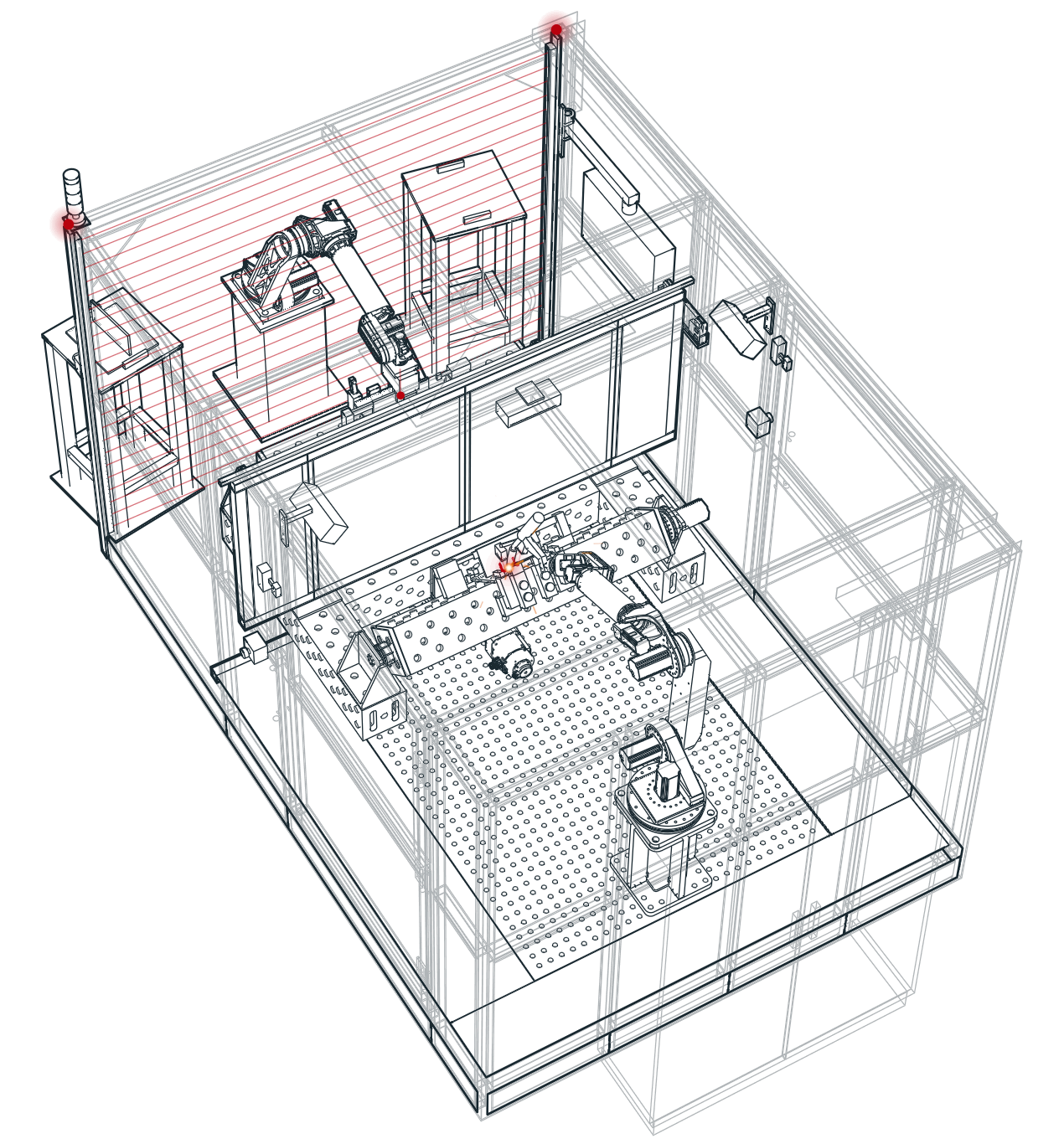
Rosie 1400, inside War Machine.
Every weld cell, machine tool and new line needs an arm. Rosie 1400 is a six-axis industrial arm for the production floor. War Machine is the production cell around it: the operator loads one bay while Rosie works the other, so the arm is not left waiting on part handling. As an option, a second Rosie loads the cell instead. Every Rosie 1400 ships with the arm, controller, drive cabinet, cabling, pendant, and commissioning at your site.
Rosie 1400
- Axes
- 6
- Reach
- 1,400 mm
- Payload
- 15 kg
- Repeatability
- ±0.05 mm
- Supply
- 200 to 240 VAC, 3-phase
- Controller
- RosieOS, Apache 2.0
- Made in
- USA, from US and imported parts
War Machine
- Processes
- TIG, MIG, laser
- Laser source
- 2–10 kW fiber laser
- Positioner
- H-frame, turntable and A/B rotisserie
- Format
- 10 ft or 20 ft container
- System power
- 20 kW
- Track
- Lock
- Arc
- On
- Travel
- 000.0 mm
- Velocity
- 3.4 mm/s
Welding first: measured before, during, and after every weld.
Welding is our lead application. The US needs 320,500 new welding professionals by 2029, according to the American Welding Society. The welding intelligence package is a paid, optional skill on the open platform. It measures the part, tracks the seam while welding, and adjusts as the seam changes. The raw sensor data underneath stays open.
- Seam tracking
- Holds the torch on the joint while the arc is on
- Within 0.20 mm
- Weld-pool analysis
- Images the molten pool during the weld
- Every weld
- Arc-sound fault detection
- Detects arc start and process faults from arc sound
- In process
- Adaptive control
- Adjusts the weld as the seam and pool change
- Path, torch, heat
The cell also inspects fit-up and finished geometry against the CAD model with micron-level measurement, and every procedure we develop is sectioned and inspected in our metallurgical lab to ISO 13919-1.
Talk to AMR.
Tell us about your application.
We'll tell you what Rosie and War Machine can do with it.